
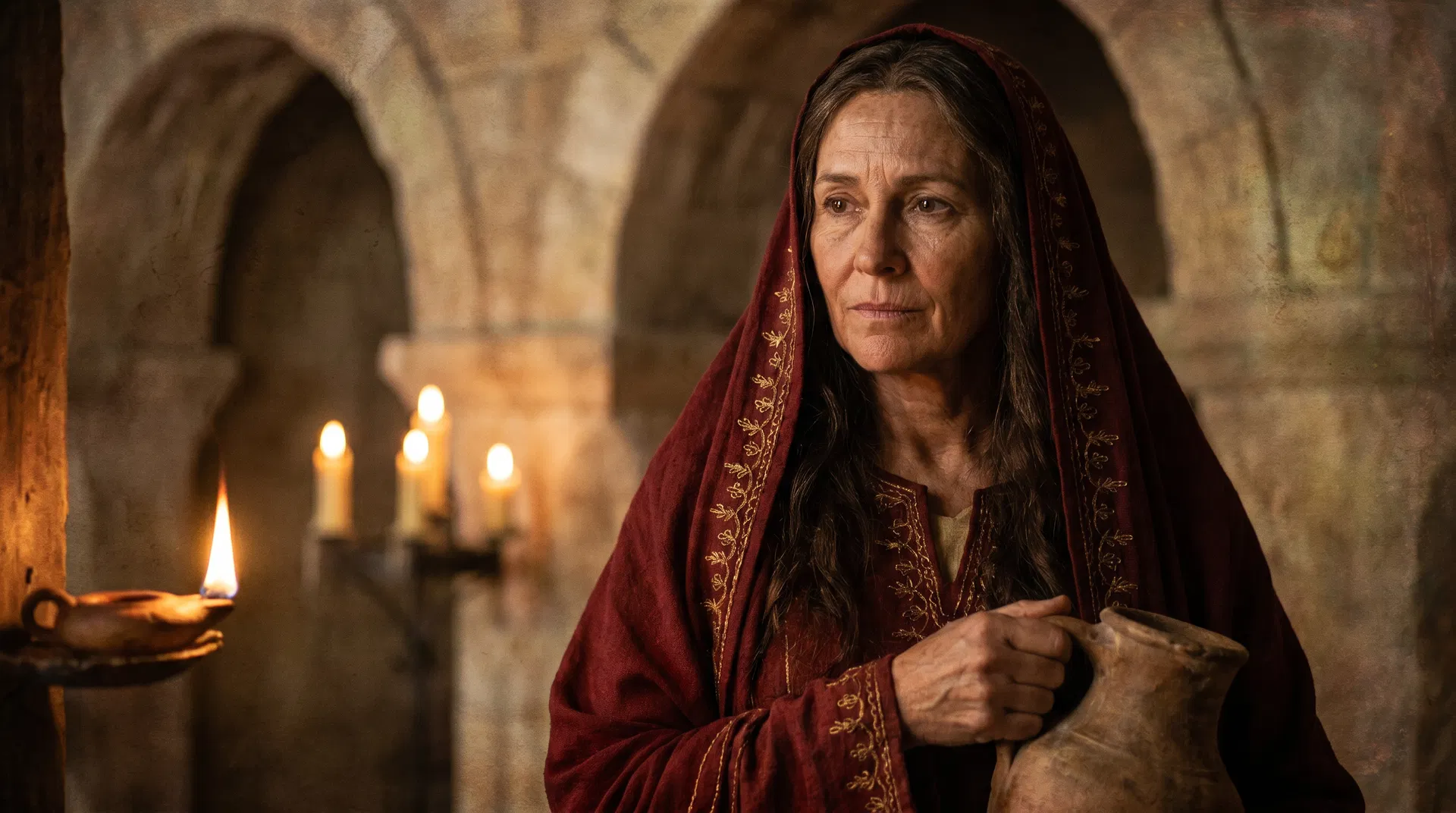
Mary Magdalene Was Not What You Think She Was
For nearly two thousand years, the Church has gotten Mary Magdalene wrong. Discover the real story of this powerful witness to the resurrection and what her reclaimed narrative means for us today.
Mary Magdalene Was Not What You Think She Was
For nearly two thousand years, the Church has gotten Mary Magdalene wrong.
Most of us grew up with a particular image of her: a woman of ill repute, a sinner redeemed by Jesus's mercy. The medieval Church conflated her with the unnamed woman who anointed Jesus's feet with expensive perfume, and with Mary of Bethany, Martha's sister. She became a symbol of sexual sin and repentance—a cautionary tale about the dangers of worldly indulgence.
But this is not who Mary Magdalene was.
The Gospels tell us something radically different. And when we look beyond the canonical texts to the apocryphal writings and the testimony of the early Church Fathers, we discover a woman of extraordinary courage, theological insight, and spiritual authority. We find someone whose story has been systematically diminished—not by accident, but by centuries of institutional bias.
Who Was Mary Magdalene, Really?
In the Gospels, Mary Magdalene appears at the most crucial moments of Jesus's ministry. She is present at the crucifixion when most of the male disciples have fled. She is the first witness to the resurrection. In John's Gospel, she is the first person to whom the risen Christ appears, and Jesus entrusts her with the mission to tell the disciples: "I am ascending to my Father and your Father, to my God and your God."
This is not a minor role. This is the role of an apostle.
The Eastern Church has always understood this. In the Byzantine tradition, Mary Magdalene is venerated as "Equal to the Apostles"—Isapostolos. She is celebrated not as a repentant sinner, but as a witness to the resurrection, a messenger of Christ, a woman of spiritual power.
The apocryphal gospels—texts preserved by the early Church but not included in the canon—give us even more detail. The Gospel of Mary, discovered in Egypt in the late 19th century, presents Mary Magdalene as a beloved disciple to whom Jesus imparts special teachings. She is depicted as spiritually mature, capable of understanding deep theological truths, and able to comfort and teach the other disciples.
In the Pistis Sophia, another apocryphal text, Mary Magdalene asks more questions than any other disciple. She is curious, engaged, intellectually alive. She is not passive. She is not ashamed. She is a seeker of truth.
Why Was Her Story Changed?
The answer is uncomfortable but important: institutional power.
As the early Church became more hierarchical and more male-dominated, the role of women in the apostolic community became increasingly marginalized. A woman who had been a primary witness to the resurrection, a recipient of special revelation, a teacher of the apostles—this was a problem for a Church that was increasingly insisting on male-only leadership.
So her story was rewritten. She was merged with other women in the Gospels. She was reduced to a symbol of sexual sin. She was domesticated, made safe, made less threatening to male authority.
But the truth persisted in the Eastern tradition. And it persists in the apocryphal texts. And it persists in the lived experience of countless Christians who have found in Mary Magdalene a model not of shame, but of courage.
What Does This Mean for Us?
Here's why this matters: Mary Magdalene's reclaimed story is a message for anyone who has been labeled, misunderstood, or told that their story doesn't matter.
If you've been told you're not welcome in the Church because of who you are or who you love, Mary Magdalene is your companion. She was misidentified, misrepresented, and marginalized by institutional religion. Yet she remained faithful. She stood at the foot of the cross. She was the first to encounter the risen Christ.
If you've struggled with shame or guilt, if you've felt broken or beyond redemption, Mary Magdalene is your witness. The Fathers of the Church saw in her not a cautionary tale, but a model of transformation through love. She encountered Christ's radical love, and it changed everything.
If you've been told your voice doesn't matter, that your questions are too dangerous, that your spiritual insights are suspect—Mary Magdalene is your advocate. She asked questions. She received revelation. She taught the apostles. She was a theologian and a witness.
The Radical Love of the Eastern Tradition
This is what the Eastern Catholic tradition offers us: a Christianity that doesn't diminish women, that doesn't hide inconvenient truths, that doesn't reduce complex human beings to moral lessons.
The Fathers of the Church—St. Basil, St. Gregory of Nazianzus, St. John of Damascus—they saw Mary Magdalene clearly. They saw her as she was: a woman of faith, a witness to the resurrection, a bearer of the Gospel. They didn't need to change her story to make her acceptable. They celebrated her as she was.
And in doing so, they offer us a different way of being Christian. A way that honors the full humanity of women. A way that takes seriously the experiences of those who have been marginalized. A way that sees in the struggles of the saints not occasions for shame, but opportunities for transformation.
An Invitation
At Magdalene House, we are committed to telling the true stories—not the sanitized versions, but the real ones. We believe that the radical love of Jesus, as witnessed in the Eastern tradition, is meant to heal, to welcome, to transform.
If you've been hurt by the Church, if you've been told you don't belong, if you're searching for a community that takes seriously both the ancient wisdom of the Fathers and the real struggles of real people—we want you to know: you are welcome here.
Mary Magdalene was not what the medieval Church told us she was. And you are not what your shame has told you that you are.
The risen Christ meets us in our brokenness, just as he met Mary Magdalene at the tomb. And he says to us what he said to her: "Go and tell."
Your story matters. You matter. And there is a place for you in this community of seekers, of wounded healers, of people learning what it means to follow Jesus in radical love and radical honesty.